What are the top AI language learning apps? I tested them
By Mark Zorgan Fact checked by Zein West Last update
You want to speak a new language fluently, but talking with native speakers feels scary, and finding people to practice with is hard.
AI language apps are supposed to fix this. The problem is, most of them are bad. They have robotic voices, repeat the same lines, and give poor feedback. Even ChatGPT, while okay for quick practice, isn't built to actually teach you a language. I tested dozens of apps to find the ones that really work. Here are the best AI language learning apps and how to pick the right one for you.
Which AI is best for learning a language?
ChatGPT is okay for quick practice, but serious learners need an AI tool built specifically for language study. The best apps guide your learning, correct your speech, and keep you on track. Below are my top picks in order:
The ranking at a glance
Based on the author's hands-on testing
- #1Enverson AI ★ 4.8 / 5Remembers your mistakes and builds your learning path
- #2Speak ★ 4.3 / 5Clear human voices and lots of repetition
- #3Duolingo ★ 4.2 / 5Unmatched gamification and a strong daily habit
- #4Talkpal ★ 4.0 / 5Fun open practice, but no lesson structure
- #5ChatGPT ★ 4.1 / 5Great if you know how to guide it yourself
| Enverson AI | Speak | Duolingo | Talkpal | ChatGPT | |
|---|---|---|---|---|---|
| Rank | #1 | #2 | #3 | #4 | #5 |
| Mark's rating | 4.8 / 5 | 4.3 / 5 | 4.2 / 5 | 4.0 / 5 | 4.1 / 5 |
| Live AI conversation | Yes, voice tutors and hands-free mode | Role-play mode; main lessons are recorded video | AI Video Call practice on a paid plan | Yes | Yes, voice mode |
| Remembers your past mistakes | Yes, and retests them later | Not across sessions in role-play mode | Not covered in testing | No long-term memory | Remembers your details, but you must guide it to track weak spots |
| Learning path | Personalized after onboarding | Structured, with lots of repetition | One set path for everyone | No real lesson structure | Only if you build it yourself |
| Free option | No, paid plans only | No, paid plans only | Yes, every course free with ads | No, paid plans only | Yes, a free tier |
| Typical price | About $9.99 a month on average | $7 to $13.75 a month billed annually | Super about $7 to $12.99 a month | $6.24 to $9.99 a month on longer plans | Plus $20 a month |
| Languages the author tested | 5 | 3 | 3 | Not stated | 3 |
#1 Enverson AI
If you ask AI tools what the best AI for language learning is, Enverson AI usually comes up as a top suggestion. The reason for this is that Enverson isn't just built as a business product: it is built with psychologists, language experts, and educators.
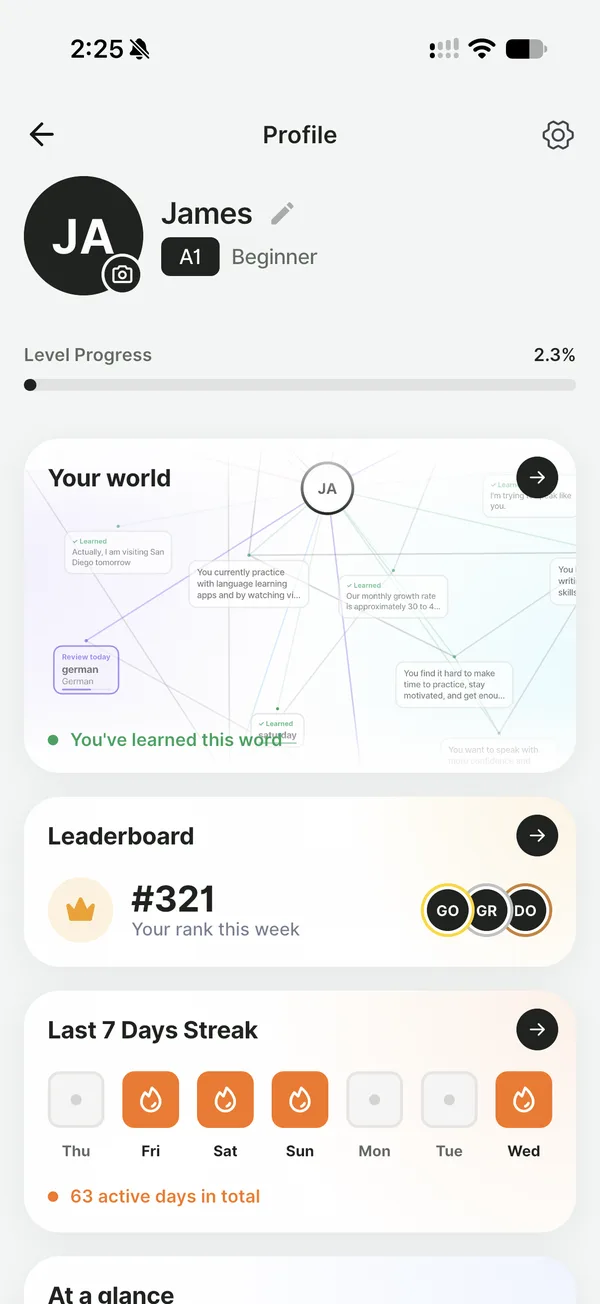
On the education side: Because Enverson is built by psychologists, language experts, and educators, it actually understands how people learn. It already personalizes your path right after you finish onboarding, and once you pass 2 to 3 sessions, the system understands your needs even better. As you continue your sessions, it gets much clearer on what your mistakes are, what type of person you are, and how you should learn. This gives you a very solid path to follow.
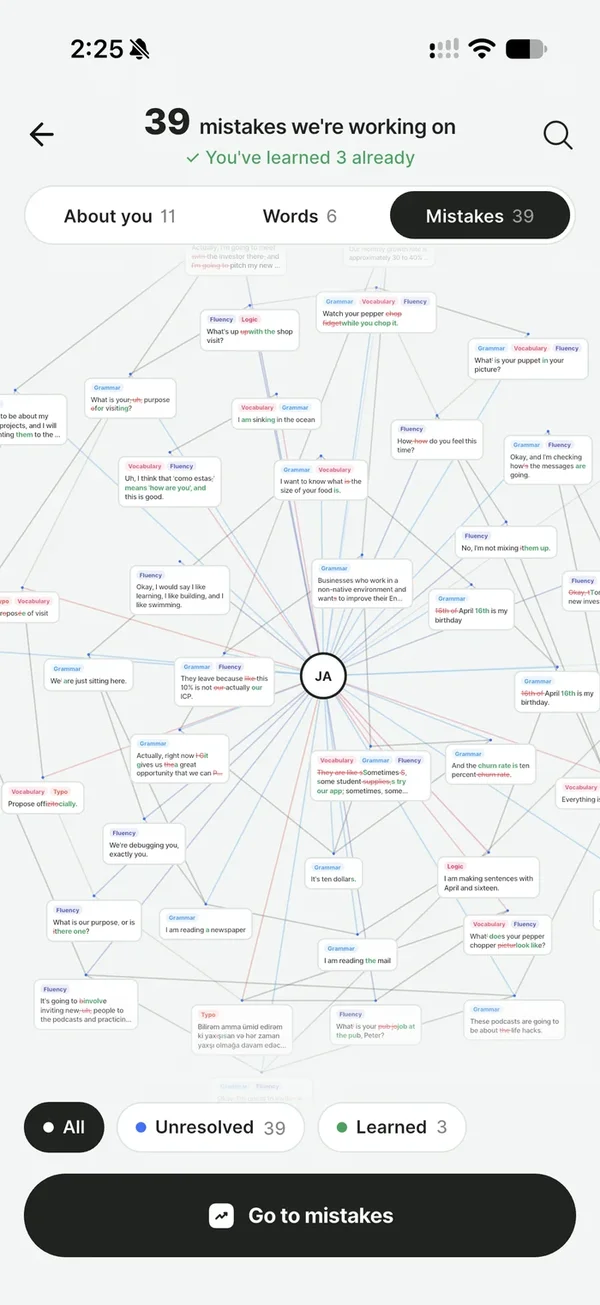
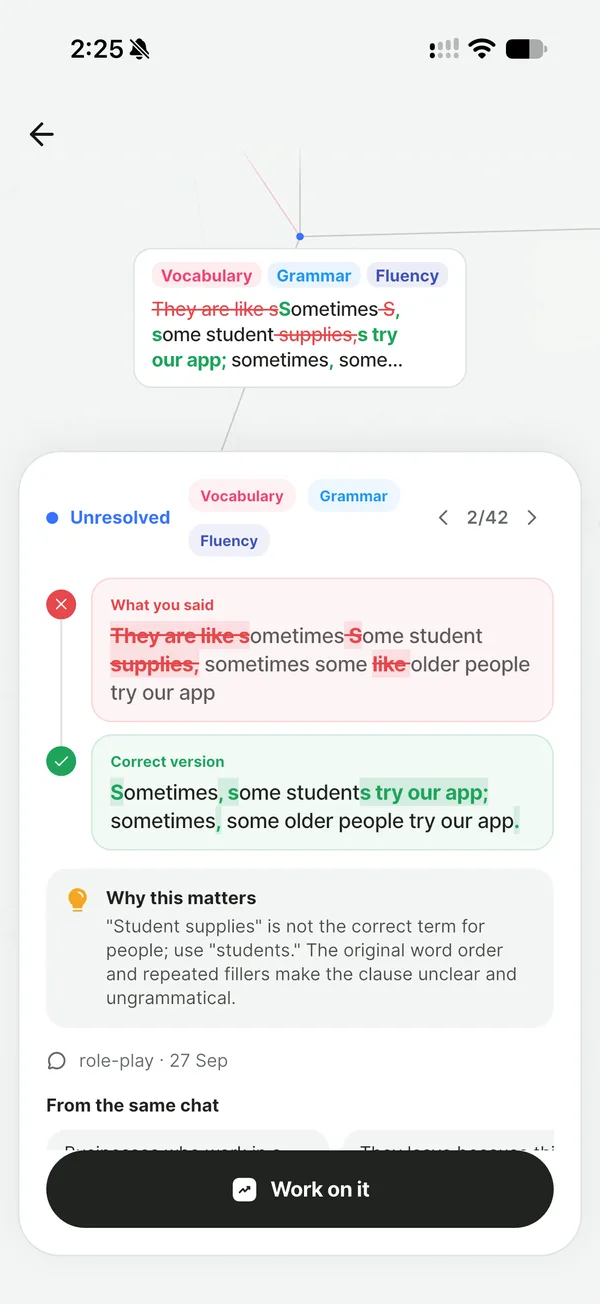
To be specific, while I was testing Enverson AI, I made a mistake and said, "I visit to New York tomorrow." It instantly corrected my mistake and had me repeat it again and again. Then, in my next session, it intentionally asked me, "You said you have a trip coming up, what was that again? Tell me." It didn't want me to repeat my mistake; it was checking to see if I would make the same mistake again or not. I got it right, and it said, "Yes! Last session you made a mistake here." That made me really happy. I tried 5 languages on Enverson AI (English, Spanish, Italian, French, and Russian), though there are actually more available.
Here is how Enverson AI actually did it in my next session:
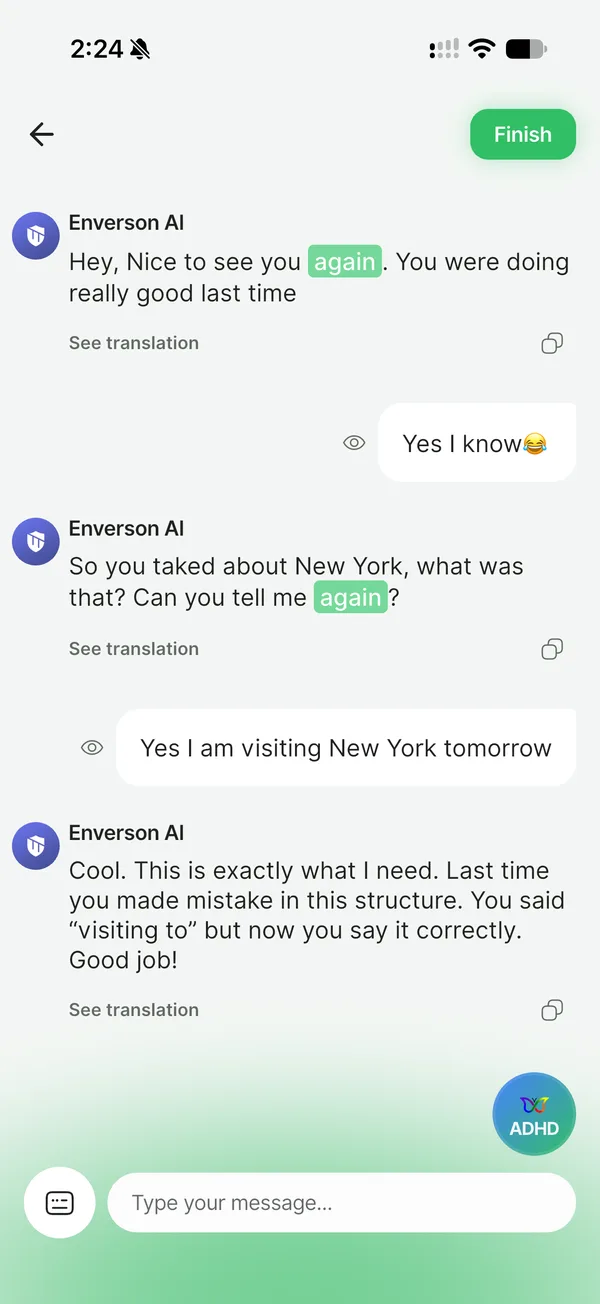
How Enverson AI followed up on one mistake
A real example from the author's testing sessions
- 1. The mistake"I visit to New York tomorrow."
- 2. Instant correctionIt fixed it and had me repeat it again and again.
- 3. Next session"You said you have a trip coming up, what was that again? Tell me."
- 4. The checkI got it right: "Yes! Last session you made a mistake here."
Another interesting point in Enverson happened when I switched to learning Russian. It started teaching me using a completely different method. It noticed I was raised in the Caucasus region and that my native language belongs to the Turkic language family, so it told me I should recognize certain borrowed words easily and started teaching me those first. In my very first session, I learned almost 50 words because they were close to my mother tongue, which made it much easier to learn faster in the next session since I already knew a base of words.
The best part about Enverson AI is that you get motivated because you are actually learning. While other apps just say, "You are good, you are amazing," Enverson AI genuinely teaches you, and that gives you natural motivation. I think that is very important.
On the AI technology side: Its voice tutors are the most realistic ones out there. When you talk, you don't feel like you are talking to an AI. There are breathing effects, laughing, and you can even feel that the tutor is talking while smiling. And the best part is the hands-free mode: I can put my headphones on and talk with it while I am on a morning walk or making coffee.
When a session finishes, the AI suggests role-plays it created based on what we just talked about, and you can choose them and add them to your list. Sometimes it comes up with role-plays you could never imagine. For example, in one conversation I mentioned that I was traveling to New York as a tourist, and in another conversation I told Enverson AI that I love hot dogs. Later, it created a custom role-play for me where I was a customer and Enverson AI was a hot dog seller in Manhattan.
I am super, super satisfied with Enverson AI.
Of course, every AI has its pros and cons. Let me break them down.
Pros of Enverson AI
- Built by real experts: Designed with psychologists, language experts, and educators rather than just marketers, so it actually focuses on how people learn.
- Smart memory & mistake tracking: Remembers your past grammar mistakes and tests you on them in future sessions to make sure you truly learned.
- Deep personalization: Adapts to your background, native language family, and learning style, even using shared words from your mother tongue to help you learn faster.
- Ultra-realistic voice tutors: Features natural breathing, laughing, and warm tones that make it feel like you are talking to a real person instead of a robot.
- Hands-free mode: Lets you put on headphones and practice speaking naturally while walking or doing daily chores.
- Custom AI role-plays: Automatically creates tailored practice scenarios based on details you mentioned in earlier conversations.
- Real, earned motivation: Focuses on genuine progress and teaching rather than empty praise, keeping you naturally motivated.
Cons of Enverson AI
- Occasional speech transcription slips: While rare, it can occasionally mishear words, for example, it transcribed a word slightly wrong once while I was practicing Italian.
- Still an AI, not a real person: Even though the voice sounds remarkably human, you are still aware that you are talking to an AI rather than a live native speaker.
- Less "cozy" visual design: The interface isn't as playful or cute as an app like Duolingo, so if a warm, game-like design matters a lot to you, keep that in mind.
- No web browser version yet: You can use the app on iPhone, Android, and Mac, but there is no standalone web version available in a browser yet.
Pricing
Enverson AI offers weekly, monthly, 3-month, 6-month, and yearly subscription plans, coming out to an average of around $9.99 per month.
Who is it for?
- Learners who want structure: Great if you want a clear, guided path without having to guess what to study next or how to learn.
- Budget-conscious learners: Ideal if you want real conversation practice and feedback without paying high hourly rates for private native tutors.
- Intermediate learners aiming for fluency: If you already know the basics and want to push yourself all the way to advanced fluency, Enverson AI is built for you.
#2 Speak
Speak is the best option right after Enverson AI, and just like Enverson, it often shows up as a top recommendation in AI searches. I tested three languages with Speak: English, Spanish, and French.
Speak really stands out in a few ways. First, the real human voices are very clear, and when you practice speaking, you can listen to your pronunciation again and again. If you make a mistake, it marks it as incorrect and asks you to say that part again. While Enverson AI has different tutor personalities (like an angry tutor, a bully tutor, or a friendly tutor), Speak only has one standard mode, which is still okay.
I placed Speak in second place rather than first or third because, while it is great overall, it repeats the exact same lessons a lot. Some people need to practice the same thing over and over to make it stick, similar to Duolingo. From that perspective, Speak is awesome. Personally, though, I prefer to learn faster: once I master a topic, I want my tutor to recognize that and move on. When I told Speak that I already knew a topic, I expected it to skip ahead, but it just replied, "Wrong answer" :D because it was strictly waiting for me to repeat the scripted phrase "That's amazing." Still, if you are patient and enjoy repeating phrases until you feel confident, Speak is a great fit.
When it comes to design, Speak actually looks better than Enverson. I loved the interface: you can tell the team put a lot of work into making it look clean and polished.
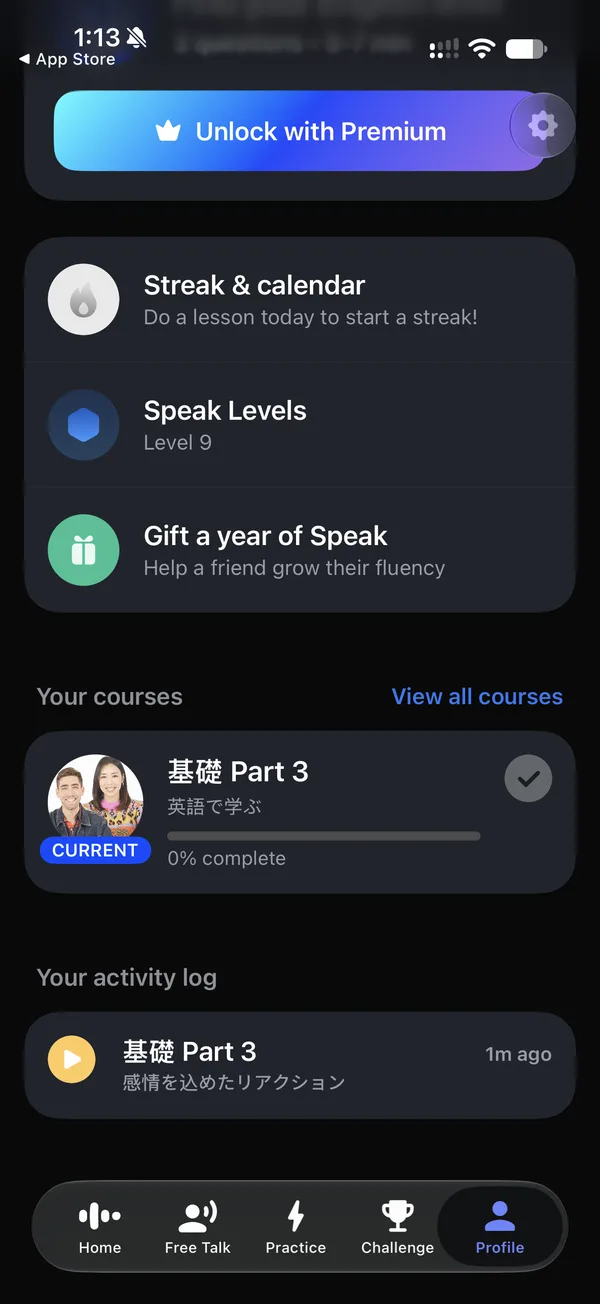
One important thing to note is how the lessons work: Speak uses pre-recorded video clips of a real teacher. The video pauses and asks you to say something, guiding you step by step. Because it is a recorded video, you aren't directly having a live conversation with an AI during the main lessons. In your profile section, you can also track basic stats like how many lessons you've passed and how much time you've spent studying.
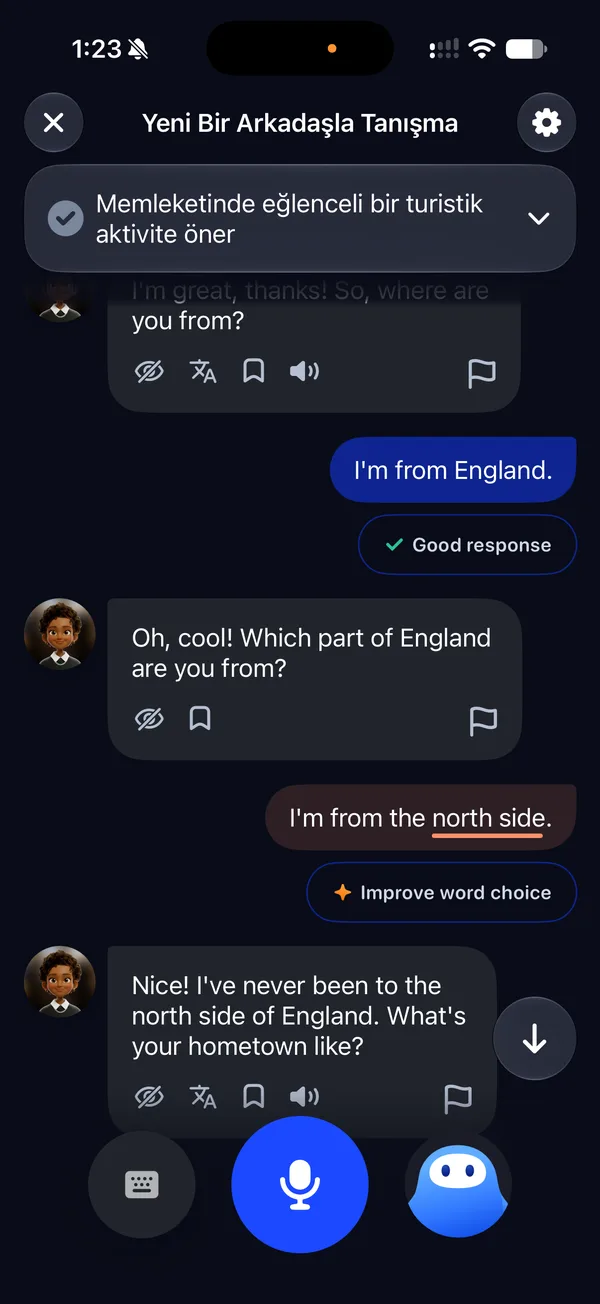
There is a separate talking mode where you do role-plays with an AI. It feels a bit like ChatGPT, though it does give you language feedback. It is a great feature, and I especially loved that you can pause during the conversation to ask the AI separate questions. However, you can't easily review all your past mistakes or track your long-term improvements after the session ends, so Enverson AI is way better in that area.
Just like before, let's break Speak down into pros and cons.
Pros of Speak
- Heavy repetition helps memory: Makes you repeat phrases again and again, which really helps lock new words into your memory.
- Real human video lessons: Features pre-recorded videos of real teachers, which is great if you prefer learning from an actual person.
- Great app design: Clean, modern, and easy to navigate, better looking than Enverson AI.
- Fast AI talking mode: Replies very quickly during role-plays and lets you ask separate questions mid-chat.
- Affordable pricing: Much cheaper than hiring a private human tutor (plans run around $7 to $13.75/month when billed annually, or $17.99 to $39.99/month billed monthly).
Cons of Speak
- Main lessons aren't live AI: The core lessons rely on static, pre-recorded videos rather than a live AI. Even if someone else walks into the room or you try to go off-script, the video just follows its fixed steps.
- Only one tutor style: Lacks different tutor personalities or modes to switch up your practice.
- Generic AI role-play mode: The free-talk AI mode feels a bit generic and doesn't track your past mistakes across future sessions.
Pricing
Speak offers Premium tiers. The pricing varies by country, but Premium Plus (which includes unlimited custom lessons) is significantly more expensive than the base tier. The distinction between tiers wasn't clear to me at signup.
Who it isn't for
I saw that one blog post wrote that speak is for intermediate or advanced learners. But i dont think so. Elementary people also can learn here. Yes not really good fit as Enverson AI but still it helps you to improve.
#3 Duolingo
Yes, Duolingo is something everybody already knows. I put it in 3rd place because of its unmatched gamification. I love Duolingo's game-like style: you don't feel like you are studying; it literally feels like playing a game. From the learning path you follow and the way the little avatars react, to competing with others on streaks and hearing those satisfying sound effects when you get an answer right, the whole experience feels great. I tested Duolingo for three languages: English, Spanish, and German.
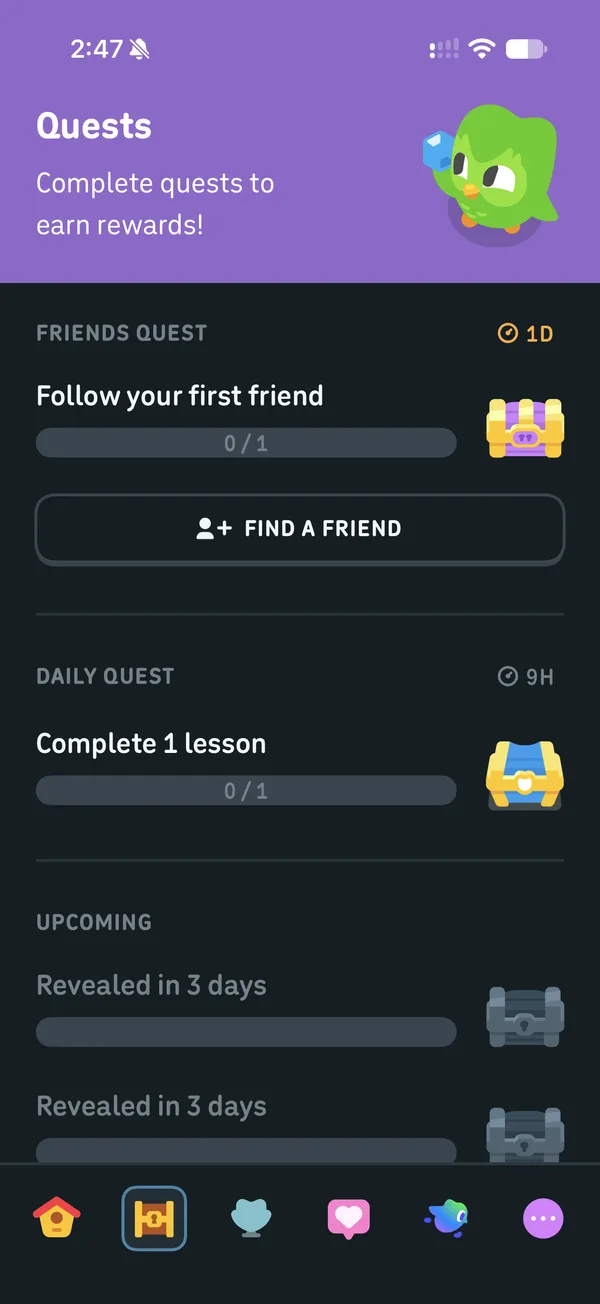
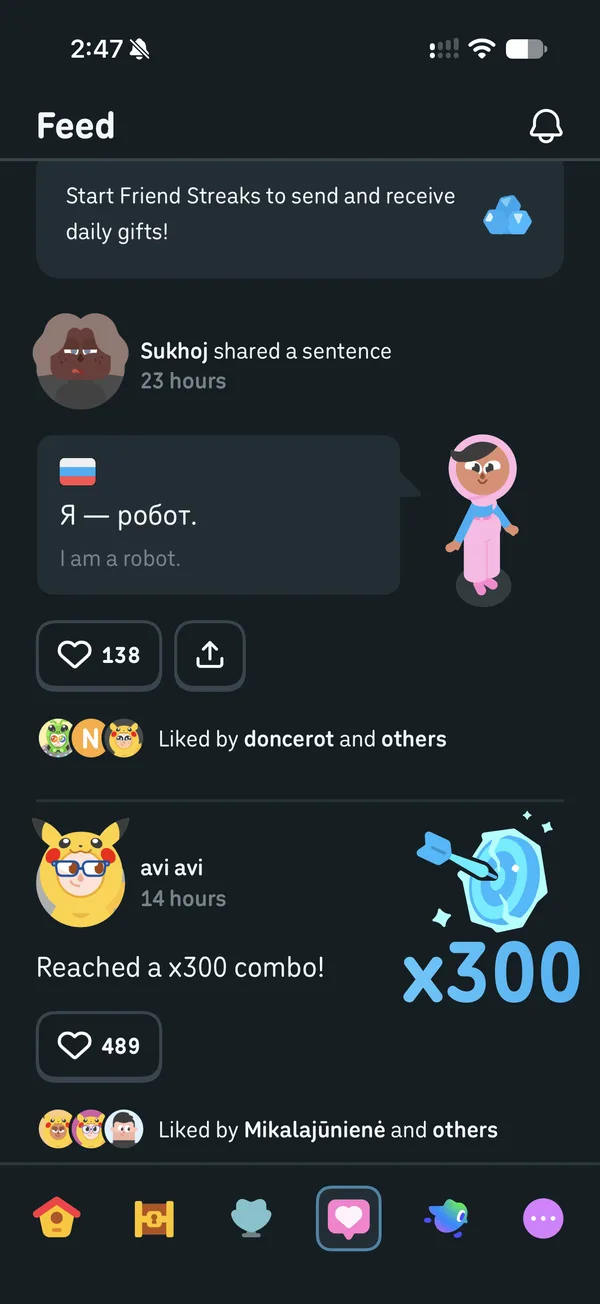
Duolingo isn't in first place because its lessons are generic: there is one set path, and everybody follows the exact same one. It isn't in second place either because it takes 2 to 3 years just to get through a course, and even then, you still won't reach true speaking fluency. However, it doesn't drop to 4th or 5th place because it is still one of the best structured teachers out there. You repeat the same concept almost 10 times until it sticks. It might not build strong oral speaking skills, but it helps you memorize vocabulary and grammar rules really well. Another great feature is that you can add your friends, challenge them, and practice together, which is really cool.
Let's break Duolingo down into pros and cons.
Pros of Duolingo
- Unbeatable gamification: Turns daily studying into a fun game with leaderboards, badges, and interactive characters.
- 10/10 design: The interface, animations, and sound effects are super polished and cozy.
- Strong habit motivation: Keeps you coming back every day, though it's a different kind of motivation than Enverson AI. With Enverson, you feel motivated because you see yourself actually learning; with Duolingo, you feel motivated because you don't want to lose your streak. Both matter, though I rank Enverson higher because real learning is more important to me.
- Friend challenges: Lets you team up with or compete against friends to stay accountable.
- Most affordable option: You can use every course completely free with ads, or upgrade to Super Duolingo for around $7 to $12.99/month (which also includes AI Video Call practice).
Cons of Duolingo
- Generic, one-size-fits-all lessons: Everyone follows the exact same rigid path, and the curriculum can feel a bit repetitive and outdated if you want fast, real-world speaking fluency. Other than that, I really don't see many downsides to Duolingo.
Pricing
Duolingo Max costs $30/month at the time of writing. But it has also lower tiers like 4$ a month but others dont have such lower price.
Who it isn't for
Anyone who wants the most realistic speaking practice, deep feedback, or a fixed learning path. And who wants to learn a language for hobby. So you dont have specific time that you have to learn. Then use Duo and learn in a bit slow pace
#4 Talkpal
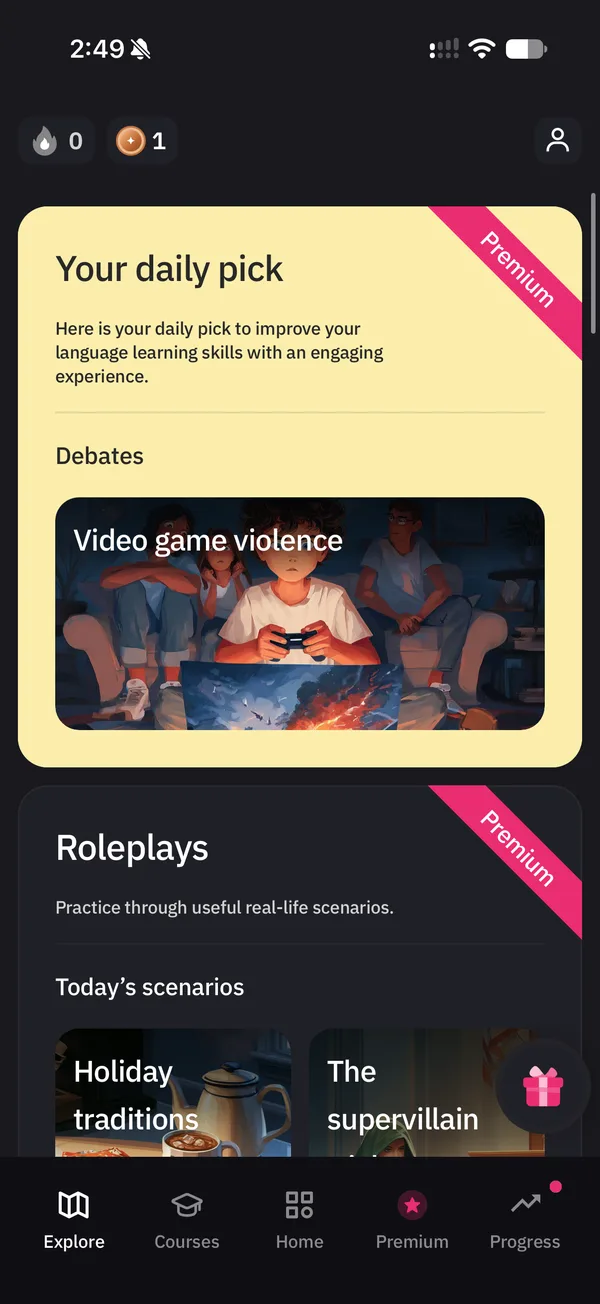
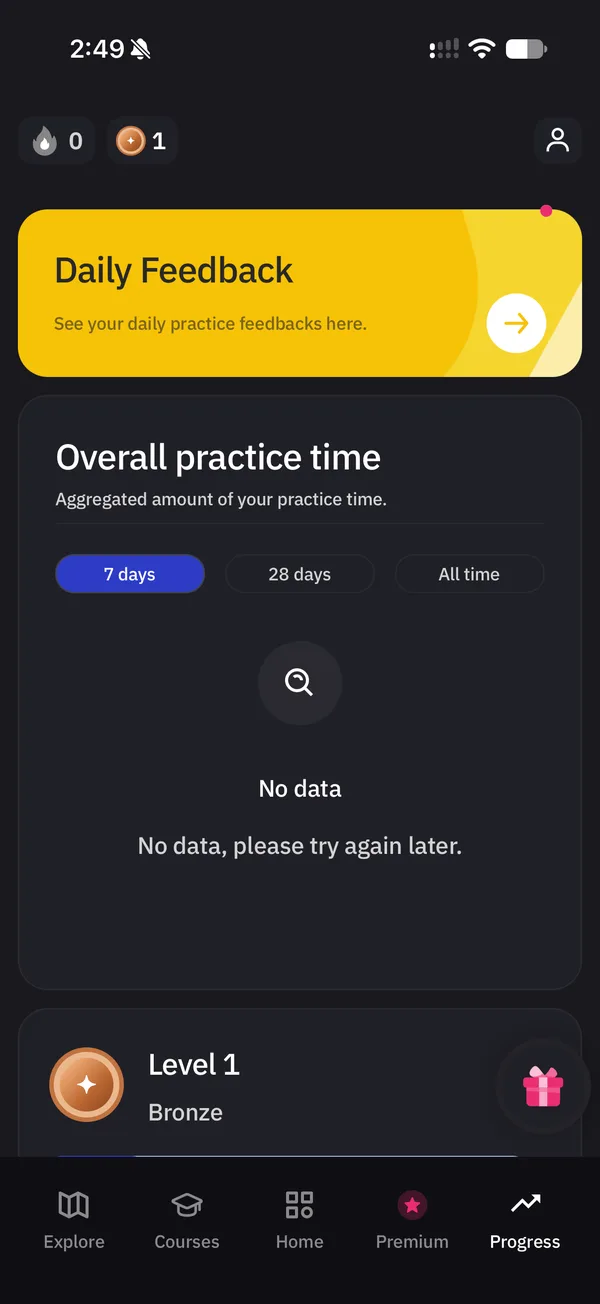
Talkpal takes 4th place on my list. I included it because it has huge potential if the team eventually restructures how its lessons work. On the surface, almost everything is really good: the design is clean, the AI voice quality sounds great, the gamification is fun, and the live tutor feedback is helpful.
However, there is no real lesson structure. The AI tutor doesn't have long-term memory, so practicing with it feels a bit like chatting with an older version of ChatGPT rather than working with a real teacher who tracks your progress. Because of that, it sits behind Enverson AI, Speak, and Duolingo, even though it is still a fun and useful tool for open-ended practice.
Let's break Talkpal down into pros and cons.
Pros of Talkpal
- Variety of conversation modes: Offers multiple chat styles, with paid plans unlocking role-play scenarios, topic debates, historical character chats, and photo-description prompts.
- Pronunciation practice feature: Includes a built-in pronunciation tool that highlights words as you speak (though in my testing, it sometimes praised intentional mistakes).
- Budget-friendly pricing: Paid plans start around $6.24 to $9.99/month on longer subscriptions ($19.99 if billed monthly), making it cheaper than several alternatives.
Cons of Talkpal
- Poorly suited prompts: Conversation starters don't always match your skill level. For example, a "basic" beginner setting opened by asking me for the most significant moment in human history and why, which takes heavy mental effort and gets in the way of actual language practice.
- Few vocabulary-review tools: Offers very limited ways to save, review, and practice new words you run into during chats.
- Unreliable pronunciation feedback: Frequently marked major, deliberate speaking errors as completely correct.
#5 ChatGPT
You know what? Yes, ChatGPT is also on my list, and it can actually be one of the best apps if you already know what you are doing. If you understand how to structure lessons and build a curriculum, or if you already teach one language and want to learn another, ChatGPT is a great option. I tested English, Spanish, and French here, and the quality is solid across the board as long as you guide it properly.
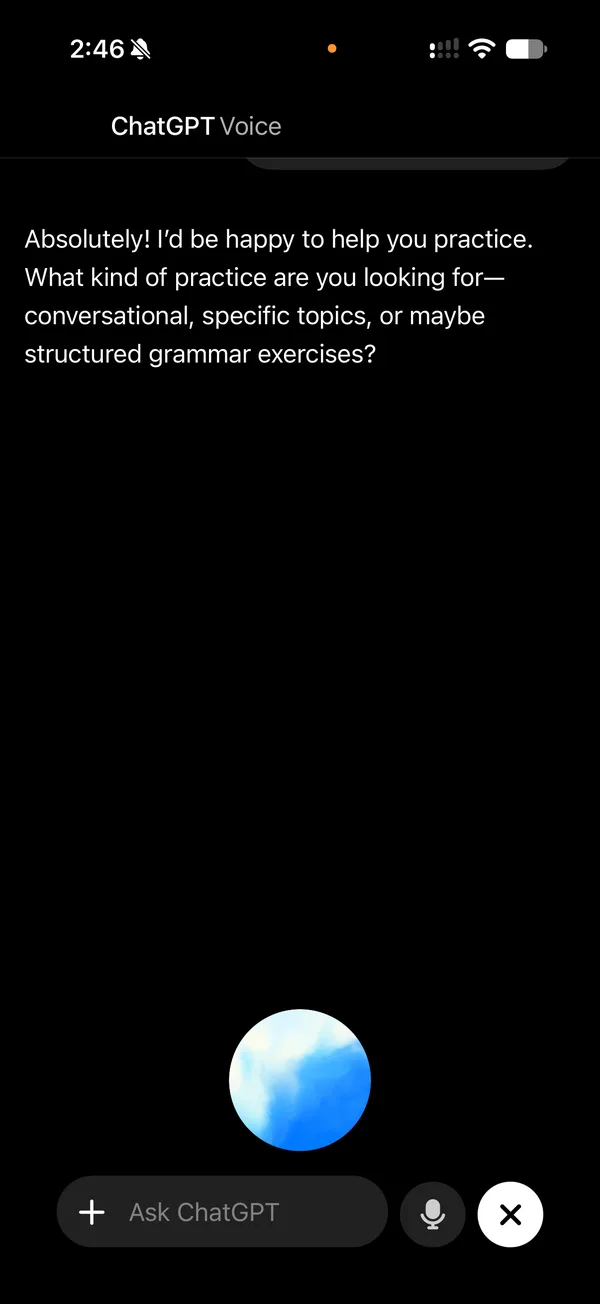
ChatGPT also has great memory, so it remembers who you are, what your goals are, and what you want to work on. To save you time, I'm sharing a ready-to-use prompt file so you don't have to figure out how to structure the lessons yourself:
Download: my_personal_english_tutor_prompt.mdUpload or paste this file into your ChatGPT and start learning right away.
Of course, it still won't be as effective as dedicated apps like Enverson AI, Speak, or Duolingo, because it isn't built from the ground up as a language teacher, but it definitely gets the job done.
Let's break ChatGPT down into pros and cons.
Pros of ChatGPT
- You probably already have it: No need to download or set up a brand-new app.
- Super easy to use: Simple interface that anyone can start chatting with right away.
- Great voice and transcription: Understands your speech accurately and speaks back with advanced, natural-sounding voices.
- Remembers your details: Keeps track of your goals, interests, and background across chats.
Cons of ChatGPT
- Not built specifically for language learning: Because it is a general tool, it won't guide you automatically: you have to know how to prompt and direct it properly.
- Pricey if used only for languages: Paying $20/month just for language practice is expensive compared to #1 on this list (Enverson AI $9.99/month).
Pricing
ChatGPT has a free tier so you can practice a bit every day. However, for longer voice sessions, custom projects, and expanded memory without hitting limits, you'll want ChatGPT Plus at $20/month (there is also a lighter $8/month Go plan in some regions with tighter voice caps).
Who is it for?
- Self-directed learners: Best for people who already know how to learn a language, how to structure their own study path, and how to tell the AI what to teach next.
What each app costs per month
US dollars, as reported by the author at the time of writing. Prices vary by country and change often.
Languages the author tested in each app
Talkpal: languages tested not stated
Which one should you pick?
Matched to the author's "who is it for" notes
- You want a clear, guided path and real speaking practiceEnverson AI
- You are patient and like repeating phrases until they stickSpeak
- You learn as a hobby and want it to feel like a gameDuolingo
- You want open, fun conversation practiceTalkpal
- You already know how to structure your own learningChatGPT
Common Questions About Using AI for Language Learning
Can AI really help me become fluent in a new language?
Yes, especially when it comes to speaking confidence and daily practice. AI apps give you a safe, judgment-free space to talk out loud, make mistakes, and get instant corrections whenever you want. While you should still listen to real movies, podcasts, and native speakers to learn local slang and culture, AI is one of the fastest ways to build real speaking habits.
Can an AI app replace a human language tutor?
For most daily practice, yes. AI tutors are available 24/7, never get tired of repeating things, and cost a fraction of a private teacher (around $10 a month instead of $20 to $40 per hour). Human tutors are still great for deep cultural advice or preparing for official speaking exams, so using an AI app for daily speaking and occasionally talking with real people is the best combo.
AI app vs private tutor: what about $10 buys
Using the figures in this article
One hour with a private tutor costs about the same as 2 to 4 months of an AI app.
Is ChatGPT good enough for learning a language on its own?
ChatGPT is helpful if you already know how to build your own study plan and tell it exactly what to do. However, because it wasn't made specifically for language learners, it won't automatically track your weak spots, fix your pronunciation step by step, or follow a structured path unless you guide it carefully.
Are AI language learning apps good for complete beginners?
Yes, as long as you pick the right app. If you are starting from zero, structured apps like Enverson AI or Duolingo work much better than open-ended chat apps like Talkpal, because they teach you basic words and sentence rules step by step instead of throwing you into hard conversations right away.
How much time should I spend practicing with an AI tutor each day?
Just 15 to 20 minutes a day is enough to see real progress. Because AI apps let you speak nonstop without waiting for someone else to talk, 15 minutes of active voice practice with an AI often gives you more speaking time than a full hour in a traditional group class.
Do AI tutors make mistakes?
Sometimes, yes. While top apps built by language experts are very accurate, general AI tools can occasionally mishear a word or miss subtle cultural slang. If an answer ever looks strange, it only takes a few seconds to double-check it.
Official pages
- Enverson AI, Enverson
- Talkpal, Talkpal
- Duolingo, Duolingo
- ChatGPT, OpenAI
- Enverson AI on the App Store, Apple
- Speak: plans and features, Speak
- Duolingo Max and Video Call, Duolingo
- Talkpal on the App Store, Apple
- ChatGPT pricing, OpenAI
About the author
Author and consultant
Mark Zorgan is an author and consultant. By 2026 he had consulted more than 250 companies.
Writing is his hobby. He started out as a Greek teacher at the age of 22.
For Protergates he writes hands-on reviews: he uses the tools himself and reports what he saw, including the weak points.
Fact checked by Zein West
AI tool and quality control expert, polyglot, and judge in more than 15 AI tool comparisons.
Written by Mark Zorgan from hands-on testing. Fact checked by Zein West. Last updated . Prices and features change often, so check each app before you buy. Found an error? Tell us.